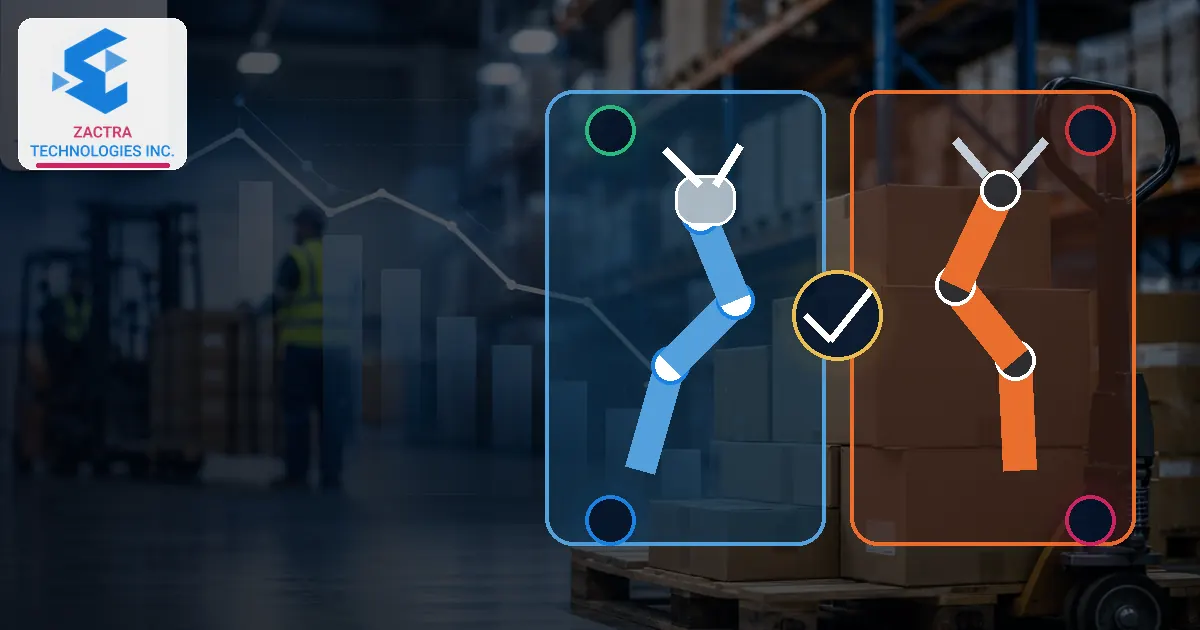
Cobot or Robot: Which is the Right Choice for Your Business? points to a practical business question: how can an organization create value that customers notice and operations can sustain? This guide examines cobot or Robot: Which is the Right Choice for Your Business through strategy, execution, measurement, and the role of technology in supporting better outcomes.
Overview
Sustainable business growth comes from understanding customers, solving a valuable problem, building reliable operations, and measuring what works. Technology can accelerate the strategy, but it cannot replace clear positioning and disciplined execution.
Detailed Guide
Automation has become a cornerstone of modern industries, enhancing efficiency and productivity across sectors. Among the diverse range of automation technologies, robots and cobots (collaborative robots) have emerged as two primary players, each catering to unique industrial needs. While both aim to improve operations, they differ significantly in functionality, design, and application. Understanding these differences can help businesses make informed decisions about which solution is best suited for their requirements.
What is a Robot?
Robots are autonomous or semi-autonomous machines designed to perform specific tasks. Traditional robots often operate in isolation from humans, carrying out repetitive, high-speed, and high-precision jobs in environments such as manufacturing assembly lines, warehouses, and hazardous areas.
Robots are programmed to execute tasks with minimal human intervention and are usually housed in safety enclosures to prevent accidents. Their applications are diverse, ranging from welding and painting to logistics and even surgical procedures.
What is a Cobot?
Collaborative robots, or cobots, are designed to work alongside humans, sharing the same workspace. Unlike traditional robots, cobots prioritize interaction, safety, and flexibility. They are equipped with advanced sensors and AI-driven technology that allows them to detect human presence and adjust their behavior accordingly, ensuring a safe and collaborative working environment.
Cobots are ideal for tasks that require a combination of human ingenuity and robotic precision, such as assembly, quality inspection, and packaging.
Key Differences Between Robots and Cobots
Workspace
Robots typically operate in segregated environments to ensure safety and avoid human interference.
Cobots are designed to share the workspace with humans, facilitating seamless collaboration.
Safety
Robots require safety barriers or enclosures to prevent accidents due to their speed and power.
Cobots are inherently safe, equipped with force-limiting technology and sensors that stop their operation if they come into contact with a person.
Programming and Usability
Robots often require complex programming and specialized expertise for setup and operation.
Cobots are user-friendly, allowing even non-technical workers to program them with intuitive interfaces and drag-and-drop functionality.
Cost and Maintenance
Robots involve higher initial costs due to their complexity and the need for enclosures and specialized programming.
Cobots are more cost-effective, both in terms of upfront investment and operational costs, making them accessible to small and medium-sized businesses.
Applications
Robots excel in high-speed, repetitive, and high-precision tasks like automotive assembly, where human involvement is minimal.
Cobots thrive in dynamic, small-batch tasks requiring human oversight, such as custom manufacturing or retail logistics.
Choosing Between Robots and Cobots
The decision to use robots or cobots depends largely on the specific needs of a business. If an operation demands speed, precision, and large-scale production, traditional robots are often the better choice. On the other hand, for tasks requiring adaptability, human interaction, and flexibility, cobots are the ideal solution.
For example:
Robots might be used in an automotive assembly line to weld car frames.
Cobots could assist a worker in a small workshop by handling repetitive tasks like screwing or material handling, allowing the human to focus on quality checks.
The Future of Robots and Cobots
As technology advances, the line between robots and cobots continues to blur. Innovations in artificial intelligence, machine learning, and sensor technology are making robots more adaptable and cobots more capable. Future factories are likely to feature a blend of both, leveraging their unique strengths to optimize operations.
Conclusion
Both robots and cobots are essential to the evolution of automation, each with distinct advantages and applications. By understanding the differences and evaluating their specific needs, businesses can harness the right technology to boost productivity, enhance safety, and stay competitive in an ever-changing market.
Key Takeaways
- clearer customer value and market positioning
- more efficient operations and team collaboration
- better acquisition, retention, and customer service
- data-informed planning and prioritization
- scalable processes supported by digital tools
The most effective approach is to connect these ideas to a defined audience, a measurable outcome, and a realistic implementation plan. Accuracy, usability, security, accessibility, and maintainability should be treated as core requirements rather than afterthoughts.
Frequently Asked Questions
Why does Cobot or Robot: Which is the Right Choice for Your Business? matter for business growth?
It matters when it improves customer value, operational consistency, visibility, or decision-making. The strongest initiatives connect activity to a measurable commercial outcome.
What should a company do first?
Clarify the customer problem, current baseline, desired result, constraints, and the smallest improvement that can be tested with reliable evidence.
Where does technology fit?
Technology should support a sound process and strategy. It can automate work, connect data, improve customer experience, and help teams measure results.
Final Thoughts
Cobot or Robot: Which is the Right Choice for Your Business? should be evaluated through practical value, evidence, and long-term impact. The refreshed structure keeps the depth of the original article while making it easier to read, navigate, and understand.
For a related digital initiative, Explore Zactra’s digital transformation services, or contact Zactra Technologies Inc to discuss requirements and next steps.