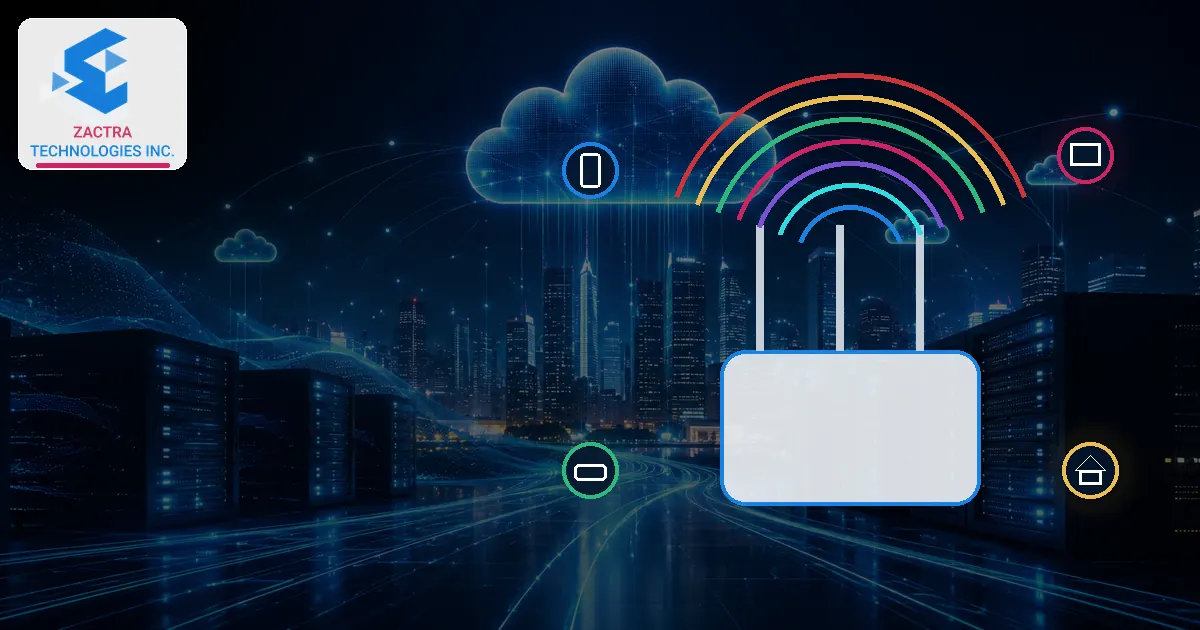
What is Wi-Fi 7? The Next Big Leap in Wireless Technology is a topic that matters because technology decisions increasingly shape customer experience, operating efficiency, security, and long-term growth. This guide explains is Wi-Fi 7? The Next Big Leap in Wireless Technology in practical terms, separates useful principles from hype, and highlights the questions teams should answer before investing.
Overview
Emerging technologies move from research and specialist environments into practical products through improvements in hardware, software, networks, standards, and economics. Understanding the difference between proven capability and speculation is essential.
Detailed Guide
The rapid advancement of wireless technology has led to significant improvements in internet connectivity over the years. From the early days of Wi-Fi to the latest Wi-Fi 7 (IEEE 802.11be) standard, each iteration has aimed to enhance speed, reliability, and efficiency. Wi-Fi 7 represents the most advanced wireless networking technology to date, designed to meet the growing demands of modern applications such as high-definition streaming, cloud gaming, virtual reality (VR), augmented reality (AR), and enterprise networking.
With its promise of extremely high throughput (EHT), Wi-Fi 7 is set to revolutionize wireless communication. In this article, we will explore the key features, benefits, applications, adoption trends, and future implications of Wi-Fi 7.
What is Wi-Fi 7?
Wi-Fi 7, officially known as IEEE 802.11be, is the next-generation wireless networking standard designed to provide faster speeds, lower latency, and improved efficiency. It builds upon the foundations of Wi-Fi 6 and Wi-Fi 6E, incorporating several groundbreaking enhancements to support data-intensive applications. The most notable improvements in Wi-Fi 7 include wider channel bandwidth, higher-order modulation, and multi-link operation (MLO), which collectively deliver significant performance boosts.
Key Features of Wi-Fi 7
1. Wider Channel Bandwidth
Wi-Fi 7 supports channel bandwidths of up to 320 MHz, doubling the 160 MHz bandwidth of Wi-Fi 6. This allows for higher data transfer rates and reduced congestion, making it ideal for environments with multiple connected devices.
2. Higher-Order Modulation (4096-QAM)
The introduction of 4096-QAM (Quadrature Amplitude Modulation) in Wi-Fi 7 allows for higher data transmission rates. Compared to the 1024-QAM used in Wi-Fi 6, 4096-QAM enables up to 20% more data to be transmitted per symbol, significantly improving network efficiency and speed.
3. Multi-Link Operation (MLO)
One of the most exciting features of Wi-Fi 7 is Multi-Link Operation (MLO). This technology enables devices to connect across multiple frequency bands (2.4 GHz, 5 GHz, and 6 GHz) simultaneously. By utilizing multiple links, Wi-Fi 7 can reduce latency, enhance data transmission reliability, and optimize network load balancing.
4. Lower Latency and Improved Reliability
Wi-Fi 7 is designed to deliver ultra-low latency, making it ideal for real-time applications such as online gaming, video conferencing, VR, and AR. The combination of MLO, wider bandwidth, and improved modulation schemes ensures seamless performance even in high-density environments.
5. Increased Network Capacity
With more efficient spectrum utilization and enhanced traffic management, Wi-Fi 7 can support a larger number of connected devices without compromising performance. This makes it particularly beneficial for smart homes, offices, and industrial applications.
6. Backward Compatibility
Wi-Fi 7 maintains compatibility with previous Wi-Fi standards, allowing older devices to connect while enabling newer devices to take full advantage of its advanced features.
Benefits of Wi-Fi 7
1. Ultra-Fast Speeds
With speeds reaching up to 30 Gbps, Wi-Fi 7 provides significantly faster internet access, allowing users to stream 8K videos, engage in cloud gaming, and transfer large files seamlessly.
2. Reduced Congestion
By leveraging 320 MHz bandwidth and MLO, Wi-Fi 7 reduces network congestion, ensuring smooth performance even in high-traffic environments such as airports, stadiums, and large office spaces.
3. Improved Gaming and Streaming
The lower latency and increased throughput of Wi-Fi 7 enhance online gaming and video streaming experiences, reducing buffering and lag.
4. Better Support for IoT and Smart Devices
With the growing number of smart home devices, Wi-Fi 7 provides the necessary bandwidth and efficiency to manage multiple connections without interference or slowdowns.
5. Enhanced Enterprise and Industrial Applications
Enterprises can benefit from Wi-Fi 7’s improved security, reliability, and efficiency, making it suitable for large-scale deployments in offices, factories, and warehouses.
Applications of Wi-Fi 7
1. Smart Homes
Wi-Fi 7 enhances smart home connectivity, supporting multiple IoT devices, smart TVs, security cameras, and voice assistants without network slowdowns.
2. Cloud Gaming and VR/AR
The low latency and high speed of Wi-Fi 7 enable seamless cloud gaming and immersive VR/AR experiences, providing users with real-time interactions.
3. 8K Streaming and Multimedia
Wi-Fi 7’s enhanced bandwidth allows users to stream 8K videos and high-resolution multimedia content without buffering.
4. Healthcare and Telemedicine
Hospitals and telemedicine applications benefit from Wi-Fi 7’s improved connectivity, ensuring reliable communication between medical devices, remote patient monitoring systems, and healthcare professionals.
5. Autonomous Vehicles and Smart Cities
Wi-Fi 7 can support advanced vehicle-to-everything (V2X) communication, improving traffic management and enabling smart city infrastructure.
Adoption and Market Trends
1. Consumer Adoption
Wi-Fi 7-enabled routers and devices are expected to become mainstream by 2025. Major tech companies such as Intel, Qualcomm, and Broadcom have already started developing Wi-Fi 7 chipsets.
2. Enterprise Deployment
Businesses are expected to adopt Wi-Fi 7 for enhanced network performance, particularly in environments that require high-speed connectivity and low latency.
3. Device Compatibility
New laptops, smartphones, gaming consoles, and smart home devices will incorporate Wi-Fi 7 capabilities, improving overall user experience.
Challenges and Considerations
1. Cost of Upgrading
As with any new technology, upgrading to Wi-Fi 7 requires investment in compatible routers, devices, and network infrastructure.
2. Regulatory Approvals
The adoption of Wi-Fi 7 depends on global regulatory approvals for the 6 GHz spectrum, which varies across regions.
3. Transition Period
While Wi-Fi 7 offers significant advantages, it will take time for widespread adoption as users gradually upgrade their devices.
The Future of Wi-Fi 7
Wi-Fi 7 is poised to revolutionize wireless connectivity by offering unprecedented speed, reliability, and efficiency. As more devices become Wi-Fi 7-compatible, its adoption will accelerate across various industries. The technology will play a crucial role in enabling futuristic applications such as smart cities, AI-driven automation, and immersive digital experiences.
Looking ahead, researchers and developers will continue to refine Wi-Fi 7 technology, exploring ways to further optimize performance and expand its capabilities. Future iterations of Wi-Fi standards may introduce even higher data rates, improved security features, and enhanced energy efficiency.
Conclusion
Wi-Fi 7 marks a significant leap forward in wireless networking, bringing ultra-fast speeds, lower latency, and improved efficiency. Its advanced features, such as wider channel bandwidth, 4096-QAM, and Multi-Link Operation, make it the ideal choice for modern applications, from gaming and streaming to enterprise networking and smart cities.
As technology evolves, Wi-Fi 7 will set new benchmarks for wireless communication, ensuring a seamless and high-performance digital experience for users worldwide. Businesses, consumers, and industries should prepare to embrace Wi-Fi 7 to unlock its full potential and stay ahead in the digital age.
Key Takeaways
- new forms of computing and interaction
- faster communication and richer digital experiences
- opportunities for new products and services
- improvements in simulation, research, and training
- long-term competitive learning for organizations
The most effective approach is to connect these ideas to a defined audience, a measurable outcome, and a realistic implementation plan. Accuracy, usability, security, accessibility, and maintainability should be treated as core requirements rather than afterthoughts.
Frequently Asked Questions
What is the main idea behind What is Wi-Fi 7? The Next Big Leap in Wireless Technology?
The main idea is to use Wi-Fi 7 to solve a defined problem more effectively. The exact approach depends on users, data, integrations, security, scale, and budget.
How should a business evaluate Wi-Fi 7?
Start with a clear use case, measurable outcome, realistic pilot, and an assessment of technical, security, operational, and maintenance requirements.
Can Zactra help with a project related to Wi-Fi 7?
Zactra Technologies Inc provides web, mobile, software, AI, and related digital development services. A discovery conversation can clarify scope, architecture, risks, and delivery priorities.
Final Thoughts
What is Wi-Fi 7? The Next Big Leap in Wireless Technology should be evaluated through practical value, evidence, and long-term impact. The refreshed structure keeps the depth of the original article while making it easier to read, navigate, and understand.
For a related digital initiative, Explore technology consulting and development with Zactra, or contact Zactra Technologies Inc to discuss requirements and next steps.